
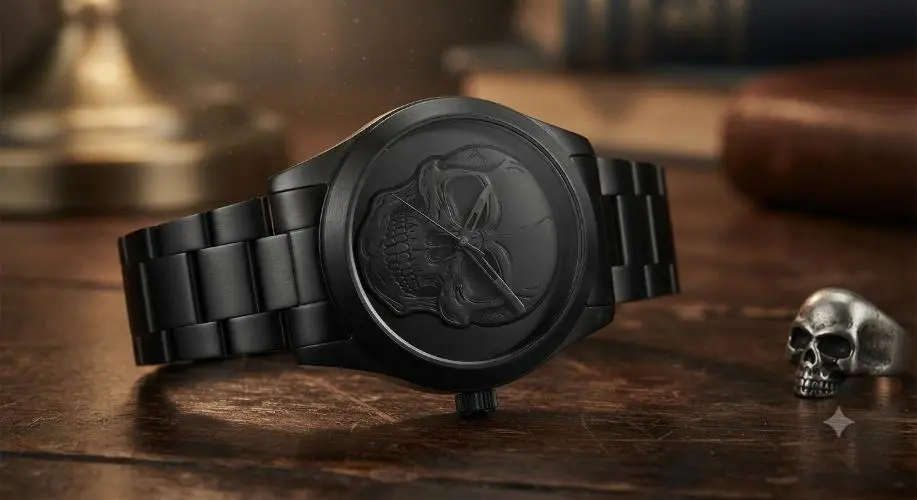
Skull watches sit at an odd crossroads: half fashion statement, half centuries-old memento mori tradition. Before you buy one, it helps to know what you’re actually looking at. “Skull watch” covers everything from a $15 novelty piece to a $20,000 Swiss collector’s item. The two have almost nothing in common except the shape on the dial.
This guide breaks down the real styles available. It covers what separates a well-made skeleton dial from a cheap stamped one, and where the skull-on-a-watch idea actually came from.
Why Skulls Ended Up on Watch Dials
The pairing of skulls and timepieces is older than wristwatches themselves. During the 16th and 17th centuries, European clockmakers and jewelers produced skull-shaped pocket watches and pendant watches as memento mori pieces. Owners carried them as a reminder that time, and life, are finite. Historians commonly credit Mary, Queen of Scots with owning a silver skull-shaped watch whose cranium hinged open to reveal the dial inside.
That symbolism split into several directions over time. In Mexican tradition, the sugar skull (calavera de azúcar) represents remembrance and celebration rather than fear of death. It’s tied to Día de los Muertos and offers a much warmer reading of the same shape. Biker and rock subcultures took the opposite path: from the 20th century onward, the skull became shorthand for rebellion and nonconformity. Modern watchmakers borrow from all three threads depending on the design.
A separate but often-confused concept is the skeleton dial. It has nothing to do with skulls specifically — the term refers to a watch case and dial cut away to expose the mechanical movement underneath. Some brands combine a skull motif with a skeleton dial. In those pieces, the bridges and plates of the movement itself form the skull shape, which is a genuinely difficult engineering problem — not just a printed design.
If you’re curious about the anatomy behind the symbol itself, our skull facts page covers the real bone structure the skull motif is based on.
Real Luxury Skull Watches (For Context — Not What’s Linked Below)
It’s worth knowing this category exists. None of it is realistically an Amazon purchase, but it explains where the aesthetic below comes from. Several serious Swiss watchmakers build actual collector pieces around the skull motif:
- Bell & Ross has produced skull-themed watches since 2009, including the BR 01 Skull Bronze and the Laughing Skull. The hand-wound movement takes the literal shape of a skull and crossbones, visible through the case back.
- Hublot has released several Big Bang “Sugar Skull” and “Skull Bang” limited editions. Some runs cap at 50–200 pieces worldwide, typically priced from $11,000 to over $20,000.
- Chopard, HYT, and independent watchmaker Fiona Kruger have each released their own high-concept skull pieces, usually in very limited numbers.

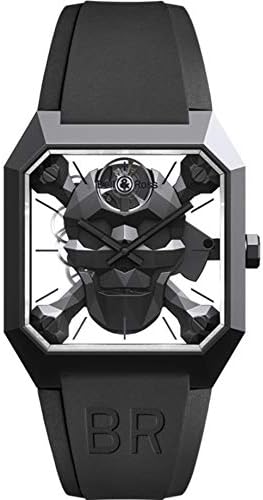

If you’re drawn to this aesthetic but not the price tag, there’s good news. The same two ideas — a skull motif and an exposed mechanical-style dial — show up in far more affordable watches below. They won’t carry a Swiss movement or a five-figure price, but they capture the same visual idea.
Philipp Plein “The $kull” Collection
Philipp Plein’s “The $kull” line works differently than the ultra-luxury pieces above. It’s a real, currently-available collection in a more accessible price range — roughly $300–$800 retail, with fashion-watch pricing rather than Swiss watchmaking pricing. The line uses a 3D-faceted skull as the dial’s central design element, typically on a stainless steel case with a silicone or steel bracelet and quartz movement.
It’s a fashion statement piece rather than a mechanical one. The appeal sits in the bold case design and the brand’s rebellious visual identity, not in-house movement engineering.


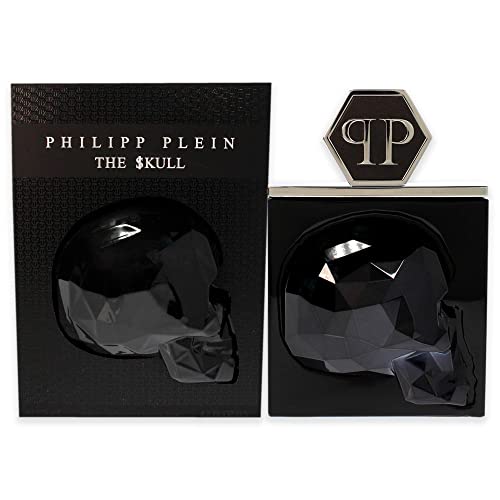
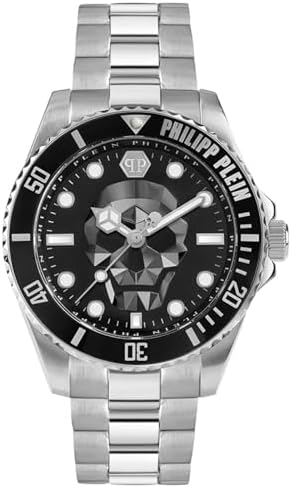


The line comes in both men’s and women’s sizing, and color options range from black-on-black to gold-tone cases.
Invicta Skull Watches
Invicta’s take on the trend is split across two recognizable sub-lines:
- Pro Diver Dia de los Muertos — dive-watch cases with a sugar-skull-style dial. The design leans into the Mexican Día de los Muertos color palette, with bright dial work and decorative “flesh” patterns rather than a gothic look.
- Artist Series Skull — larger stainless steel cases, often 45–50mm, with a more sculptural, three-dimensional skull dial and a darker, heavier aesthetic.
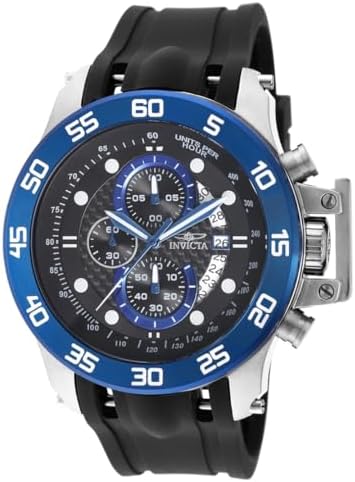
Both lines are genuinely sold through Invicta’s own retail channels and widely available on Amazon. That makes them one of the more reliable entry points if you want a recognizable brand name behind the watch without paying luxury prices.



Affordable Skeleton & Sugar Skull Watches
This category covers most of what’s actually practical to buy for under $50. Expect mixed-brand skeleton-style watches with a skull motif worked into the dial or case, usually with quartz or basic automatic movements and stainless steel or alloy cases.
What to actually check before buying one in this range:
- Movement type — quartz is standard at this price point and works fine for daily wear. A genuine automatic movement at a very low price usually signals a cheap import movement rather than a red flag on its own, but don’t expect Swiss-level accuracy.
- Case material — “stainless steel case” doesn’t guarantee a stainless steel back or crown; read the listing specifics if durability matters to you.
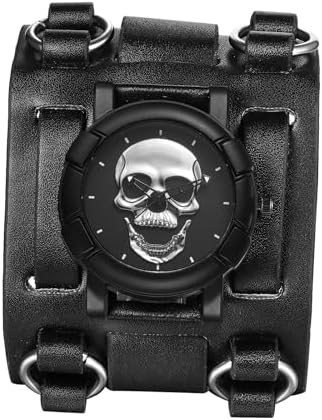
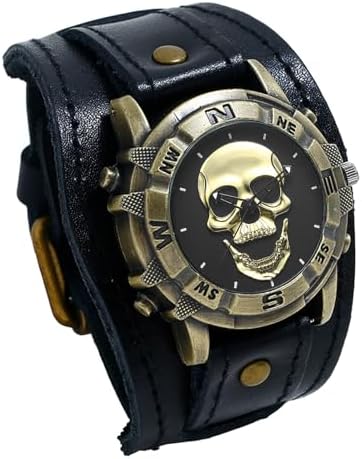
- Band width and clasp — skull watches often run large (44–50mm cases), so check lug width if you want to swap the strap later.
- Lume/visibility — many designs sacrifice hour-marker legibility for the sculptural skull dial. If you need to read the time at a glance, look for a listing that specifies luminous hands separately from the decorative elements.



Men’s Skull Watches



Women’s Skull Watches


How to Choose a Skull Watch
A few practical filters, in order of what actually matters for most buyers:
- Decide if you want the skull as decoration or as the mechanism. A printed skull on a standard dial is one thing; a movement literally shaped like a skull is another, found only in the luxury tier above $5,000. They’re very different products bought for very different reasons.
- Match the size to your wrist. Many skull watch cases run 44mm or larger by design — this is a style with a “bold or nothing” tendency. If you have a smaller wrist, look specifically for Philipp Plein’s smaller case options or women’s-sized Invicta models rather than the Artist Series.
- Check water resistance separately from style. A dive-style case (like the Invicta Pro Diver) doesn’t automatically mean the skull-dial variant carries the same water rating — check the specific listing.
- Decide how literal you want the symbolism. Sugar skull designs read bright and celebratory, inspired by Día de los Muertos. A gothic all-black skull-and-crossbones design reads completely different on the wrist. Both terms fall under the same “skull watch” search, but they aim at very different aesthetics.
Looking for a matching piece to go with your watch? Our guides to skull rings and skull t shirts cover the same range from affordable to statement pieces. Browse our full skull-themed shop for more.
Frequently Asked Questions
No. Every brand covered here — Philipp Plein, Invicta, and the general skeleton/sugar-skull category — makes women’s-sized versions. These typically run smaller cases, 36–40mm, with different strap materials.
It depends on the design tradition behind it. Memento mori pieces reference mortality and the passage of time. Sugar skull designs reference Día de los Muertos remembrance and celebration. Gothic and biker skull designs generally reference rebellion or nonconformity, with nothing to do with death specifically.
Not really — their actual skull-themed pieces are limited-edition collector items priced from roughly $6,000 to over $20,000. If you like that aesthetic, Invicta’s Artist Series Skull or Philipp Plein’s “The $kull” line are the closest affordable equivalents, though they don’t use the same in-house Swiss movements.
No — a skeleton dial just means the movement is visible through a cutaway case, with no skull involved. Some watches combine both ideas (an exposed movement shaped like a skull), which is the more complex and expensive version of the trend.