
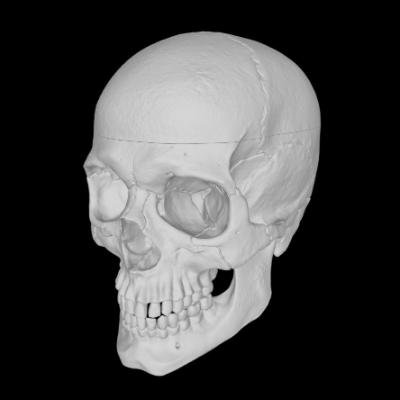
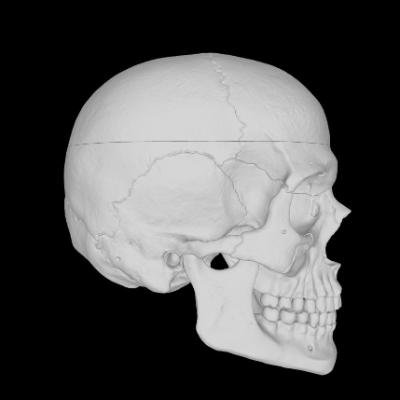
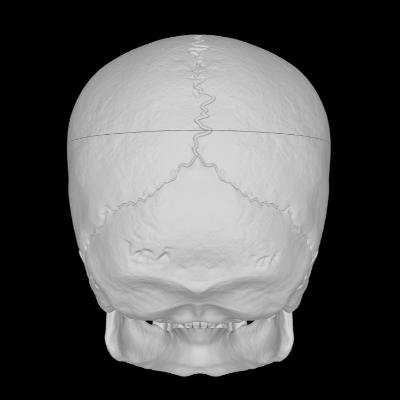
Want to explore a human skull in 3D without opening a textbook? Below you’ll find a full 360° look at a skull anatomy model — front, side, and back. You’ll also find a live interactive version you can rotate yourself, plus a curated selection of the best 3D skull models available if you want one of your own.
3D Human Skull Model Interactive
A 3D skull model is a digital or physical representation of the human skull, built for precision rather than just appearance. Its uses span several fields — medicine, education, art, and archaeology. That’s exactly why both professionals and students rely on them so heavily.

In education, these models work as teaching aids that make anatomy lessons interactive rather than purely visual. Students engage directly with a three-dimensional structure instead of memorizing a textbook illustration. This tends to improve both comprehension and retention.
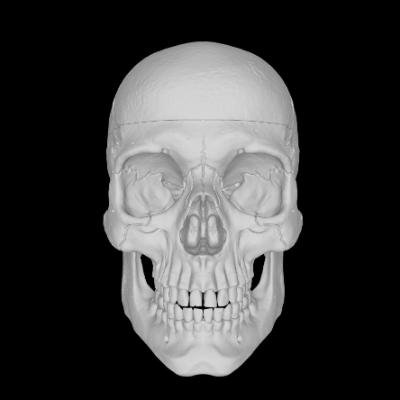
Art and design benefit from these models too. Animators and sculptors use skull references to get bone structure and proportion right before adding muscle and skin detail. Archaeologists, meanwhile, use 3D scans to study and share findings without handling fragile physical specimens.
Understanding Different Types of Skull 3D Models
Not every skull 3D model is built for the same purpose. The three main categories are anatomical models, artistic representations, and interactive models — and knowing the difference matters when picking the right one.
Human Skull Anatomy 3D Model
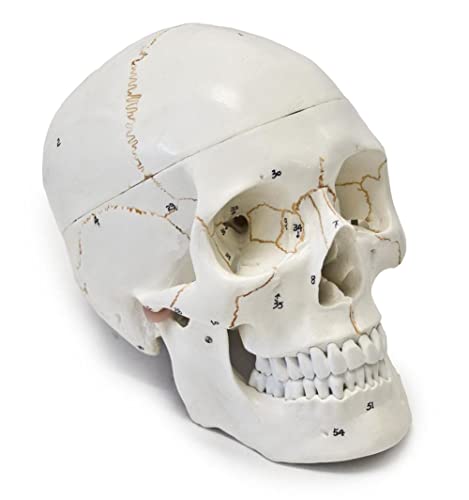
Anatomical models are built for educational and medical use. They closely replicate real skull structure, including sutures and foramina, which makes them the standard choice for anatomy students, medical professionals, and researchers working in classrooms or clinics.


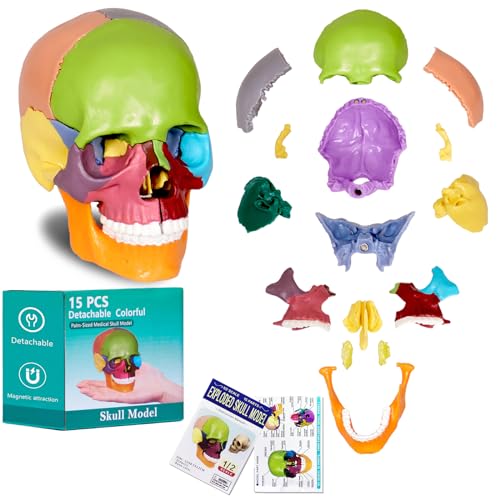
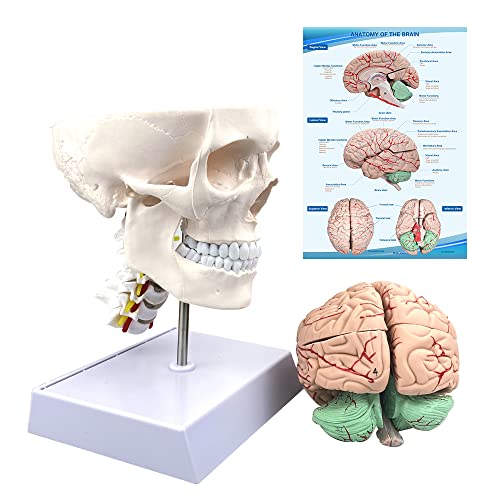
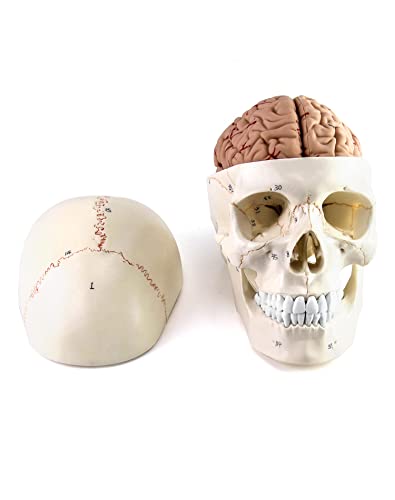
Reference Skulls for Artists
Artistic skull models prioritize visual style over strict anatomical accuracy. Designers use them in film, games, and character design, where a stylized interpretation can enhance a character or set piece more than a clinically precise one would.
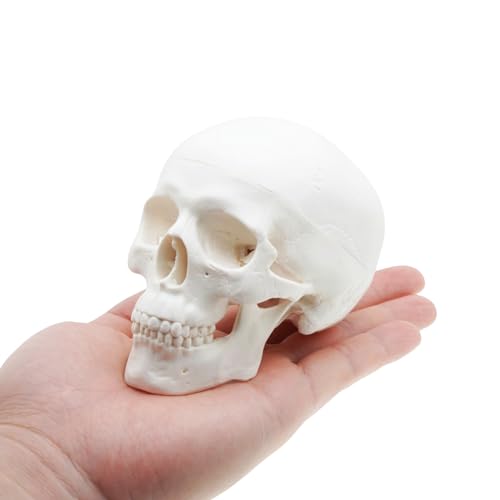


Interactive skull models, meanwhile, have grown in popularity thanks to browser-based and AR/VR tools. They let users rotate, zoom, and examine detail on demand — closer to the live model at the top of this page than to a static reference photo.
The Importance of Skull References for Artists
For artists and animators, understanding human anatomy is essential to producing lifelike work. Detailed, accurate skull references let an artist study proportions and anatomical relationships that are easy to miss when working from a flat drawing alone.
The skull is a complex structure made up of numerous bones that determine the overall shape of the head. When artists study a real reference, they understand how these components connect — which in turn informs how they draw expressions and movement, not just static form.
Working with a 3D model also lets an artist study the skull from every angle, which is especially useful for digital sculptors and animators who need to translate bone structure and silhouette into their own work with real accuracy. If you want to go deeper into the anatomy itself, our skull facts guide breaks down the bones and structures in more detail.
Applications in Education and Medical Fields
Anatomy education used to rely almost entirely on flat textbook images and static displays. This limited how well students could grasp complex, three-dimensional structures. 3D models changed that by letting learners manipulate a structure directly instead of just looking at it.
In clinical settings, surgeons use 3D models of a patient’s actual anatomy to plan procedures in advance. This approach has been shown to improve precision and reduce risk during complex operations. Instructors, meanwhile, use simulations to walk through clinical scenarios in a more engaging way.
In clinical settings, surgeons use 3D models of a patient’s actual anatomy to plan procedures in advance, which has been shown to improve precision and reduce risk during complex operations. Some institutions now also use VR environments so trainees can practice technique before ever working with a real patient.
Choosing the Right Skull 3D Model
Picking the right model comes down to your project: academic study, artistic reference, or 3D printing all call for different priorities.


Start with quality: higher-resolution models with a higher polygon count offer more realistic detail, which matters for educational use, while a lower-resolution model is often enough for a quick visual reference or rough prototype.
Next, consider the level of detail you actually need. For anatomical study, look for models that accurately depict sutures, foramina, and other key structures; for artistic work, you might prioritize a model with strong, clean lines over strict precision.
Finally, check the model’s source. A model developed or verified by a specialist carries far more educational value in a classroom or clinical setting than an unverified download — always check who built it and what data it’s based on.
For more anatomy resources and skull history, check out our skull information hub, the starting point for everything on this site.
Interactive 3D Skull Model FAQ
Yes — the model at the top of this page is free to explore directly in your browser. Click to load it, then drag to rotate and scroll to zoom into any area of the skull.
It depends on the model. Anatomical and medical-grade models are typically built from real scan data and reviewed for accuracy, while artistic models prioritize visual style over precise structure — check a model’s description before relying on it for study.
Anatomical models replicate real skull structure in detail, including sutures and foramina, and are built for education and medicine. Artistic models emphasize visual style over precision and are more common in film, games, and character design.
Some models are available for download and 3D printing, though print-ready files usually need cleanup for supports and structural integrity. Always check the model’s license before printing or distributing a copy.
Look for the level of anatomical detail (numbered parts are useful for study), the material (resin models tend to hold detail best), and whether it includes accompanying reference material like a study guide.
Conclusion
A 3D skull model turns a subject that used to live only in textbooks into something you can actually explore from every angle — whether you’re viewing it interactively, studying a photo reference, or holding a physical replica. Whether you’re a student, an artist, or shopping for a model of your own, the tools above cover every use case.