
The newborn skull is one of the most remarkable structures in the human body. Unlike the adult skull, it is soft, flexible, and designed to change rapidly during the first years of life. Understanding infant skull anatomy helps parents and caregivers recognize what is normal and when to seek medical advice.
What Makes the Newborn Skull Unique
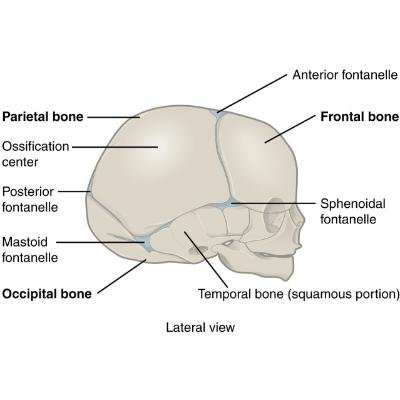
The human infant skull anatomy consists of several bones that are not yet fused at birth. This flexibility serves two critical purposes: it allows the baby to pass safely through the birth canal, and it enables the skull to expand as the brain grows rapidly during the first years of life.
The main bones of the newborn skull are the frontal bone, two parietal bones, two temporal bones, and the occipital bone. Each plays a specific role in protecting the brain and supporting facial structures. For a deeper look at how these bones are structured, visit our guide on anatomical skull.
Fontanelles: The Newborn Skull’s Soft Spots
One of the most distinctive features of the baby skull are the fontanelles, commonly known as soft spots. These are areas where the cranial bones have not yet joined together. The two main fontanelles are:
- The anterior fontanelle, located at the top of the head, which typically closes between 18 and 24 months.
- The posterior fontanelle, at the back of the head, which usually closes by 2 to 3 months of age.
Fontanelles allow the skull to be flexible during birth and give the brain room to grow. They are normal and should not cause concern unless they appear sunken or bulging, which may indicate a medical issue.
Newborn Skull Sutures
Fibrous joints called cranial sutures connect the newborn skull bones. The main sutures are the sagittal, coronal, lambdoid, and metopic sutures. These sutures remain flexible during infancy to accommodate brain growth.
As the child matures, the sutures gradually ossify and fuse into solid bone. Most major sutures begin closing around 18 months. If one or more sutures close too early, a condition called craniosynostosis can develop, which may require medical attention.
Newborn Head Shapes and Variations
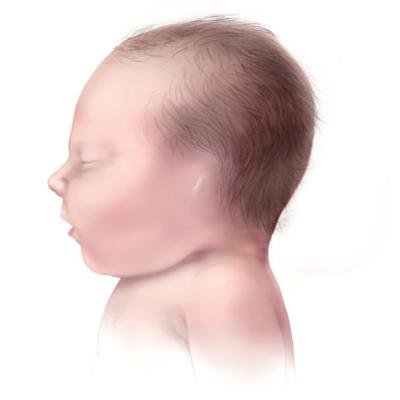
Many parents notice that their newborn’s head shape is not perfectly round after birth. This is completely normal. During delivery, the soft skull bones overlap slightly to allow passage through the birth canal, resulting in a temporarily elongated or cone-shaped head.
In most cases, the head shape corrects itself within the first few weeks. However, some infants develop positional plagiocephaly, a flat spot that forms when the baby consistently rests their head in the same position. This can usually be addressed through repositioning and tummy time.
In more pronounced cases, a baby may present with an elongated head shape that persists beyond the newborn period. If you notice significant asymmetry or unusual head shape, consult your pediatrician.
Newborn Skull Development Milestones
The infant skull develops rapidly during the first two years of life. Here is a general timeline:
- At birth: Skull bones are separated, fontanelles are open, head may appear molded from delivery.
- 2 to 3 months: Posterior fontanelle closes, head shape begins to normalize.
- 6 months: Head shape is largely rounded, brain growth continues rapidly.
- 18 to 24 months: Anterior fontanelle closes, major sutures begin to ossify.
- 2 years: The skull provides full structural protection for the brain.
Tips for Supporting Healthy Skull Development
Caring for your newborn’s skull during the early months is essential. Here are some practical recommendations:
- Always place your baby on their back to sleep to reduce the risk of SIDS.
- Practice daily tummy time while the baby is awake and supervised to strengthen neck muscles and vary head positioning.
- Alternate the direction your baby faces in the crib each night.
- Hold and carry your baby in varied positions throughout the day.
- Consult your pediatrician if you notice significant flat spots or asymmetry in the head shape.
Cranial Helmet Therapy: When Does a Baby Need a Helmet?
For most infants, repositioning and tummy time are enough to correct a flat spot over time. When a flattened area is more pronounced, though, a doctor may recommend a cranial molding helmet — sometimes called a cranial remodeling orthosis — to gently guide the skull back into a more typical shape while it’s still soft and growing.
According to the American Association of Neurological Surgeons, helmet therapy tends to work best when it starts by around 5 months of age, while the skull bones are still flexible enough to reshape easily. Treatment usually lasts between two and six months, depending on the severity of the flattening and how consistently the family uses the helmet.
A pediatrician typically makes the initial diagnosis and will first recommend conservative measures like repositioning or physical therapy. If those don’t resolve the issue, or if the flattening is moderate to severe, the family is usually referred to a specialist — often a pediatric neurosurgeon or craniofacial specialist — who can confirm the diagnosis and fit the helmet properly. A helmet should never be pursued without this kind of medical evaluation first, since it’s also important to rule out craniosynostosis before starting treatment.
When to Seek Medical Advice
While most variations in newborn skull development are normal, some signs warrant medical evaluation:
- Persistent or worsening asymmetry in head shape after 2 months
- A fontanelle that is consistently sunken or bulging
- Unusually rapid or slow head growth
- Visible ridges along the suture lines
Early detection of conditions like craniosynostosis leads to better outcomes. Do not hesitate to discuss any concerns about your baby’s head with a healthcare professional.
The Skull Beyond Infancy
The human skull continues to fascinate beyond infancy. Across cultures and centuries, it has become a powerful symbol in art, fashion, and identity. If you want to explore more curious skull facts about human anatomy, or discover unique skull rings and skull-themed collectibles, skullinfo.top has everything for skull enthusiasts.
Newborn Skull FAQ
The skull reaches full structural protection at around 2 years of age, when the major sutures ossify completely.
Yes, the soft spots called fontanelles are completely normal and allow for brain growth during the first months of life.
The fontanelles are protected by a tough membrane. Normal touching will not cause damage.
References & Further Reading
- Centers for Disease Control and Prevention. “Craniosynostosis.”
- American Association of Neurological Surgeons. “Positional Plagiocephaly.”
- Wikipedia. “Fontanelle.”