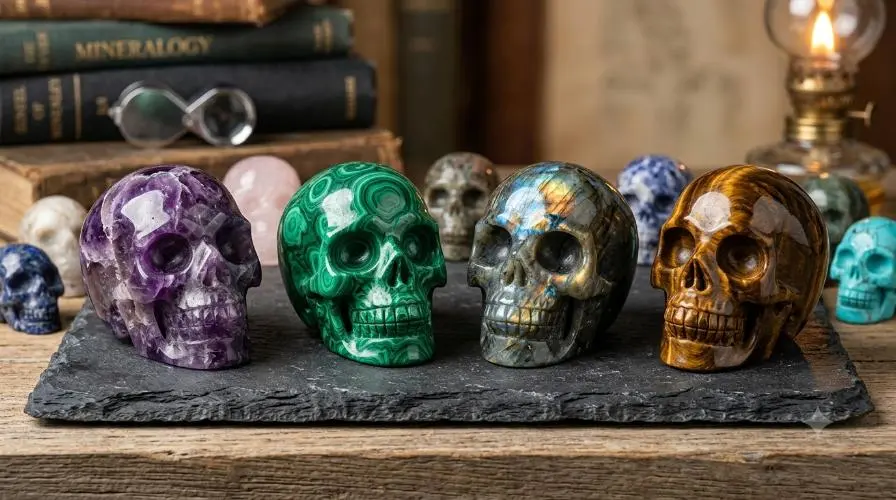
A gemstone skull is a small skull carving made from a specific crystal or mineral, rather than plain clear quartz. Each stone carries its own folklore in crystal healing traditions. So, the material you choose says as much as the shape does. Below, we break down the most popular gemstone skull types. For each one, in particular, we cover what it’s said to represent and where to find real ones.
A quick note before we dive in: the meanings below come from crystal healing folklore, not scientific research. We share them because they’re widely believed and genuinely interesting, not because we’re claiming they’re proven effects.
Quartz Family Gemstone Skull Types
Rose Quartz carries the strongest reputation of any stone on this list. It’s known as the love stone, tied to self-love, compassion, and emotional healing. The Gemological Institute of America even notes that rose quartz has long been popular with gem carvers for producing figurines and small decorative objects — skulls included. That’s exactly why “rose quartz crystal skull” and “pink quartz skull” both show up as common search terms, alongside “rose quartz skull meaning.”
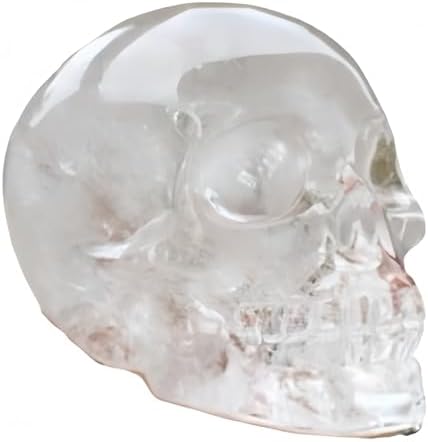
Clear Quartz is often called the “master healer” in crystal circles. Practitioners associate it with clarity and amplifying whatever intention you set.
Rose Quartz carries the strongest reputation of any stone on this list. It’s known as the love stone, tied to self-love, compassion, and emotional healing. That’s exactly why “rose quartz crystal skull” and “pink quartz skull” both show up as common search terms, alongside “rose quartz skull meaning.”
Smoky Quartz links to grounding and stress relief. Believers say it absorbs negative energy rather than reflects it.
People nickname Citrine the “merchant’s stone,” associating it with abundance, confidence, and personal power.
Finally, Amethyst rounds out the family with a reputation for calm and intuition — many people keep one near their bed for that reason.
Rarer quartz varieties also show up in this category, including Rutilated Quartz (linked to mental clarity, thanks to its needle-like golden inclusions) and Strawberry Quartz (associated with self-love and gentle emotional healing, similar to rose quartz but rarer).


Protective & Grounding Gemstone Skull Types
This group covers darker, denser stones associated with security and stability rather than emotional openness.
Black Onyx has a long reputation as a protective stone. Believers say it absorbs negative energy and shields the wearer from it.
Similarly, Black Tourmaline is one of the most commonly recommended stones for grounding, often placed near doorways or workspaces for that reason.
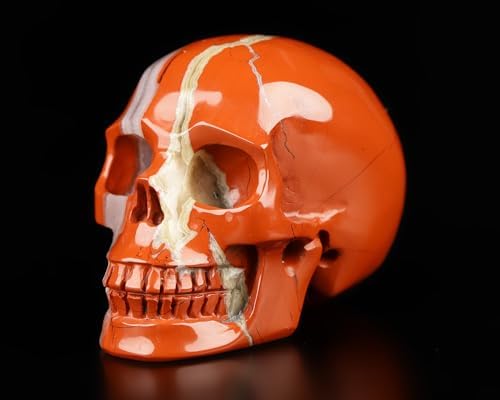
Red Jasper ties to stamina and grounding in most crystal healing traditions — practitioners often call it the “supreme nurturer.”
Bloodstone carries a reputation for courage and vitality, with a name that comes from its dark green color flecked with red.
Garnet rounds out the group, associated with passion and protection in equal measure.




Iridescent & Rare Stones
These stones stand out visually, with flash, color-shift, or translucence that plain quartz doesn’t have. Their meanings tend to follow that visual drama.
Collectors prize Labradorite for its flash of blue and green light, called labradorescence. Crystal healing traditions link it to transformation and intuition, which is why “labradorite skull meaning” gets searched so often.
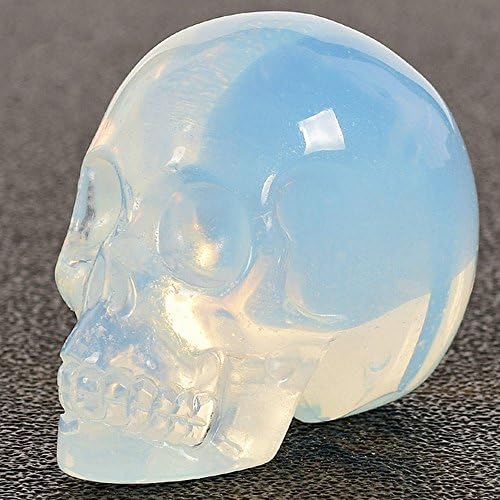
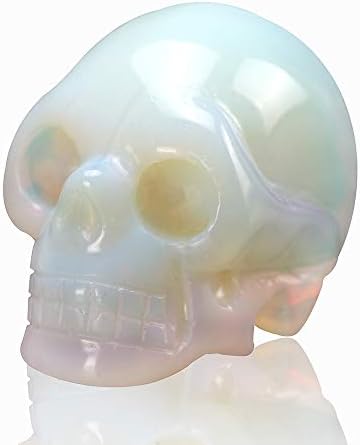
Moonstone carries lunar symbolism, tied to new beginnings and feminine energy.
People associate Opal with creativity and emotional expression, thanks to its shifting play of color.
Meanwhile, Larimar is a rare blue stone found almost exclusively in the Dominican Republic, linked to calm and clear communication.
Emerald rounds out this group as a more prestige-oriented pick, tied to renewal and loyalty in most traditions.


Wisdom & Communication Gemstone Skull Types
This group leans toward blues and deep tones, tied less to emotion and more to thought, insight, and expression.
Lapis Lazuli has one of the longest histories of any stone here. People have used it since antiquity, associating it with wisdom, truth, and inner vision.
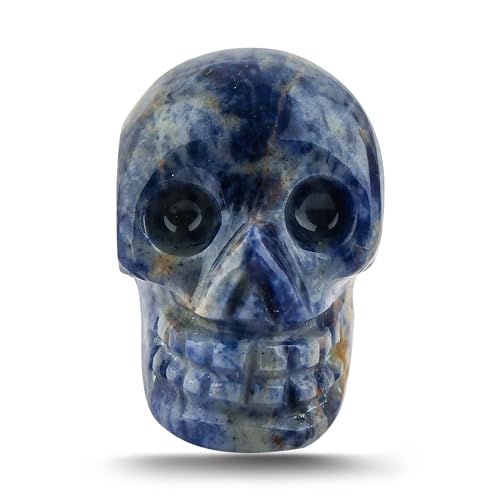
Meanwhile, Sodalite is often called the logic stone, linked to clear thinking and rational communication.
Aquamarine rounds out the group with a reputation for calm and clear self-expression, fitting for a stone named after seawater.




Nurturing & Balance Stones
The last group covers earthier, greener stones tied to growth, patience, and everyday balance rather than dramatic transformation.
Moss Agate links to abundance and new growth, often called a “gardener’s stone” for its plant-like green inclusions.
Green Aventurine carries a reputation as a luck and opportunity stone, especially in matters of prosperity.
Malachite ties to transformation and protection, with a striking banded green pattern unlike any other stone here.
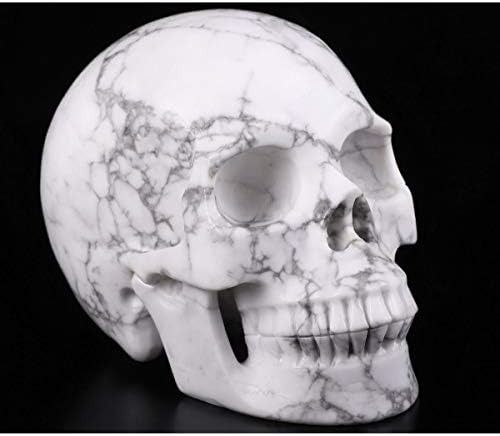
Howlite has a reputation as a calming stone, often recommended for anxiety and sleep in crystal healing circles.
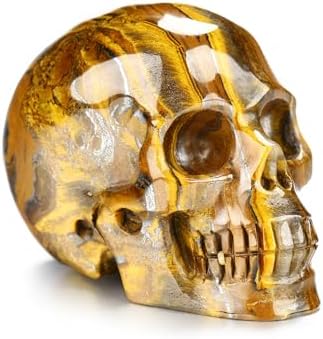
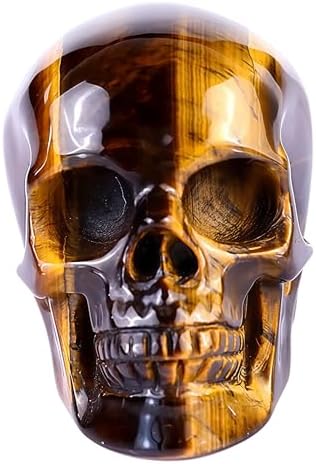
Tiger’s Eye rounds things out with a reputation for confidence and protection, one of the most requested stones in this entire category.
Two more earthy stones round out this group: Carnelian, tied to vitality and creative motivation, and Amazonite, known as a stone of truth and calm communication.



More Gemstone Skull Varieties
Beyond the stones above, collectors seek out dozens of rarer gemstone skulls. We won’t cover each one in full, but here’s a quick reference for the meanings behind the varieties you’ll find in our shop:
- Peridot — associated with abundance and warding off negative emotions
- Fluorite — linked to mental focus and clearing out disorganized thinking
- Alexandrite — tied to balance, change, and creative inspiration; one of the rarer and pricier stones on this list
- Ametrine — combines amethyst and citrine energies, associated with balancing intuition and personal power
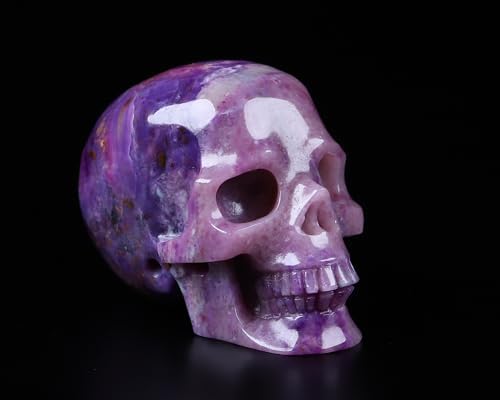
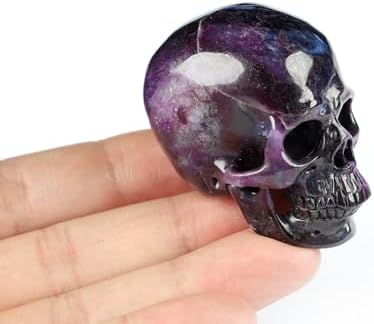
- Charoite — linked to transformation and spiritual insight
- Sugilite — known as a stone of spiritual love and protection
- Kunzite — tied to unconditional love and emotional healing
- Topaz — associated with confidence and personal truth
- Tourmaline (including black tourmaline variants) — linked to grounding and protection
- Unakite — tied to gentle emotional healing and patience
- Dragon Blood Jasper — associated with courage and vitality
- Fire Agate and Fire Opal — both linked to passion, energy, and protection
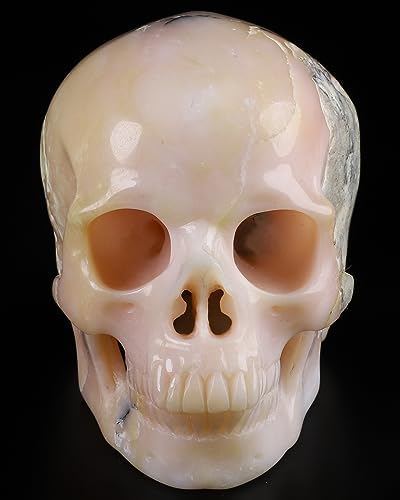
- Pink Opal — tied to emotional healing and calm
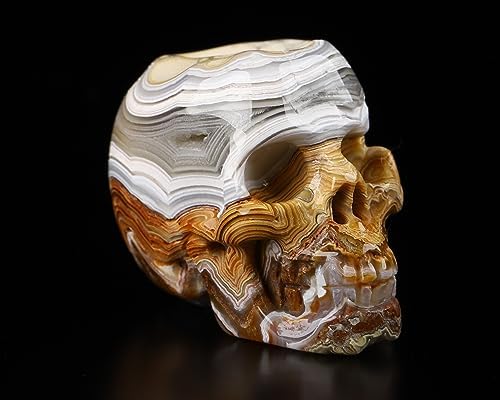
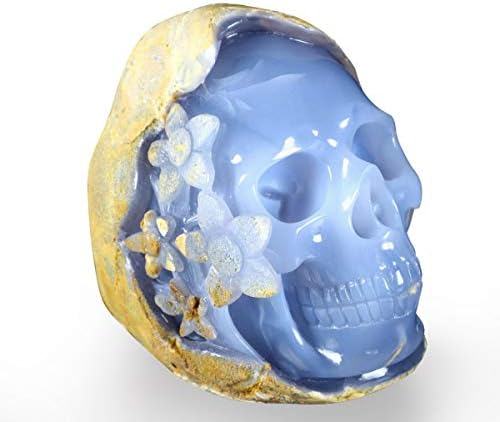
- Blue Lace Agate, Crazy Lace Agate, and Blue Chalcedony — all associated with calm communication
- Goldstone (including blue goldstone) — a man-made glass often sold alongside gemstone skulls, linked to ambition and confidence
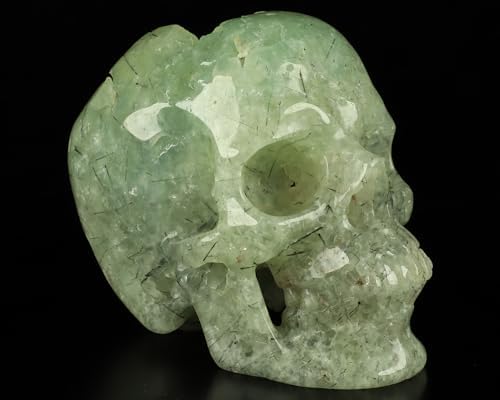
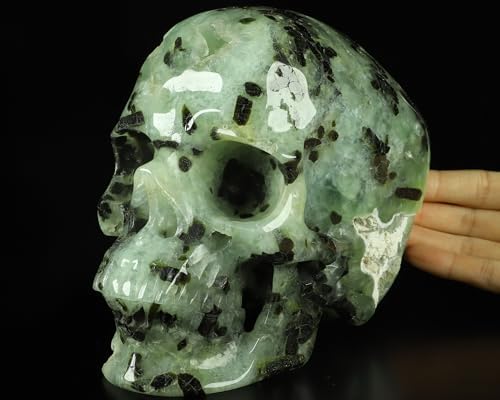
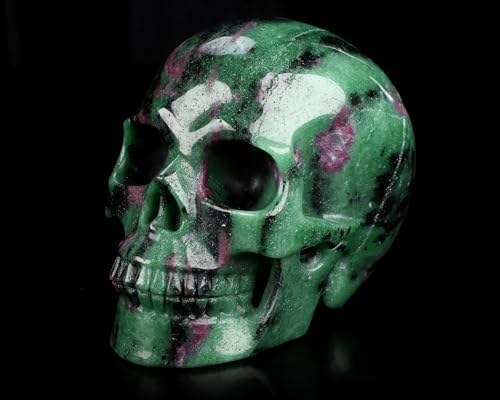
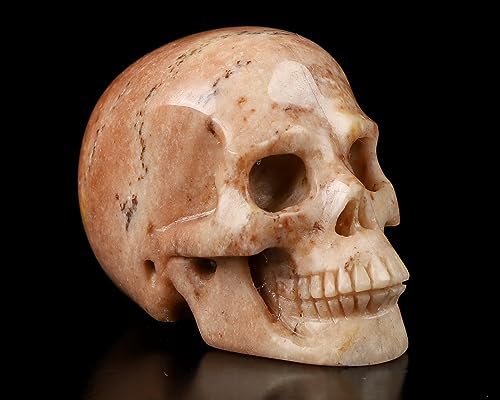
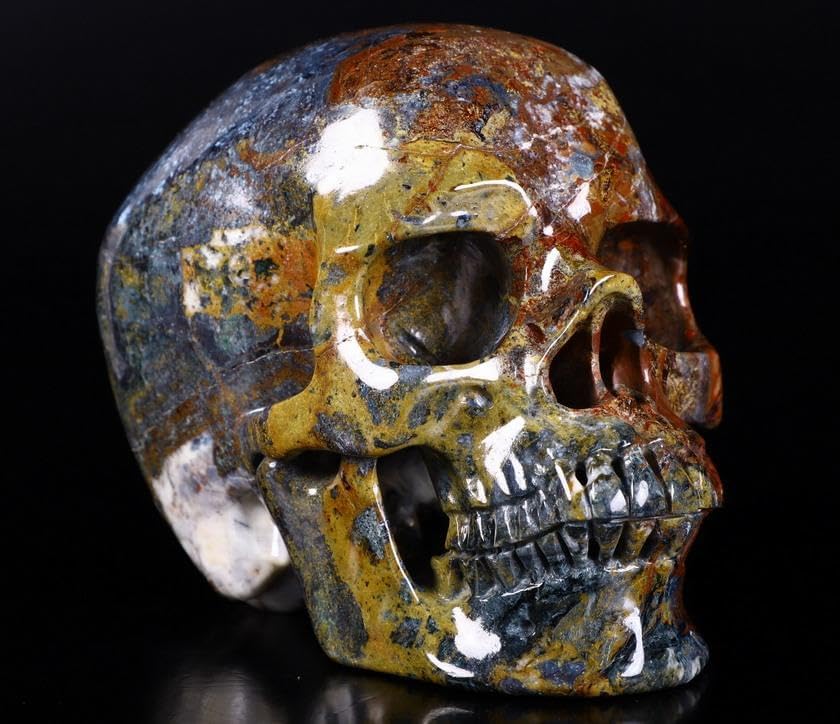
- Prehnite, Rhodonite, Ruby Zoisite, Sunstone, Pietersite, and Nuummite — rarer specialty stones, each with its own niche following among serious collectors








Beyond gemstone carvings, we also carry apparel, jewelry, and drinkware with the same aesthetic. Visit our skull stuff shop to see the full range.
Frequently Asked Questions
Both exist on the market, so it pays to check before buying. A genuine gemstone skull shows natural variation, inclusions, and weight consistent with real mineral density. Dyed glass or resin versions tend to look suspiciously uniform in color, with air bubbles visible under light. Reputable sellers usually specify the material clearly in the listing.
“Crystal skull” often refers specifically to clear quartz carvings, especially the famous museum pieces tied to Maya and Aztec legend. Read more about that history and the Smithsonian research that debunked it in our crystal skull guide. “Gemstone skull” is the broader term, covering skulls carved from any crystal or mineral, colored or clear.
Prices vary enormously based on size, material, and craftsmanship. Small pendant-sized pieces in common stones like quartz or amethyst often cost under $20. Larger, more detailed carvings in rarer stones can run into the hundreds.
Rose quartz and amethyst tend to be the most searched and purchased. Likely, that’s because both stones already have strong, well-known reputations in crystal healing circles before you even add the skull shape.
No. These meanings come from folklore and crystal healing tradition, not peer-reviewed research. Many people find value in them as personal or spiritual practice. Still, no scientific study has confirmed that any stone produces the effects described here.