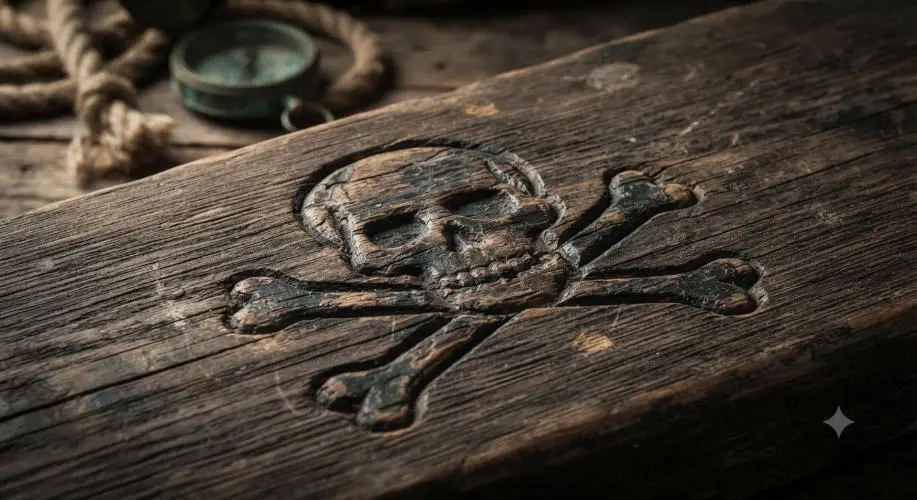
The pirate skull is usually shown as a skull above crossed bones, swords, or an hourglass. It’s one of the most recognized symbols in the world, evoking danger, rebellion, and adventure on the high seas. But the popular version of its history isn’t quite accurate. Below, we cover what the symbol actually meant to real pirates. We also look at the different visual styles it takes today, and which famous pirate flags are genuine history versus 20th-century invention.
What Does a Pirate Skull Mean?
The pirate skull, most often paired with crossed bones beneath it, served a very practical purpose: intimidation. Golden Age pirates (roughly 1650–1730) flew a skull flag to warn merchant ships that resistance meant no mercy. Surrender quickly, and the crew might survive. Fight back, and the black flag promised otherwise.
Over time, the symbol grew into something bigger than a threat. It came to represent freedom from the rigid hierarchies of naval and merchant life. Pirate crews often operated with more democratic rules than the navies hunting them. It also carries an obvious darker side: violence, theft, and the very real brutality of piracy. That duality, adventure paired with danger, is exactly why the image still resonates in fashion, tattoos, and pop culture today.
Pirate Skull Styles: Hat, Beard & Crossbones
Not every pirate skull looks the same, and the style you’re picturing usually depends on what you’re using it for.
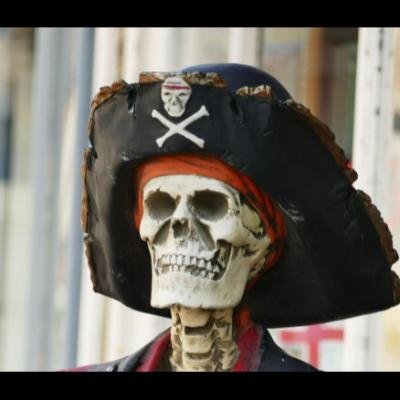
Skull with a pirate hat or bandana is the most common “mascot” style. Picture a skull wearing a tricorn hat or a red bandana, often with a gold earring or eye patch added for character. This version leans more cartoonish and personality-driven, popular in logos, kids’ costumes, and branding — the same style you’ll find on many Halloween skull masks. It’s a completely different visual family from the flat, symbolic skull-and-crossbones design.
Bearded pirate skull designs add facial hair to the skull itself, giving it a more rugged, “old sea captain” character. This style shows up often in tattoo work and illustration, where a bit of personality goes a long way.
Skull and crossbones (Jolly Roger style) is the classic, symbolic version. It’s flat and graphic, built for maximum recognizability at a distance — exactly how pirates originally used it on flags. People most often request this style as a simple outline, silhouette, or printable design, since its whole purpose was always to read clearly from far away.
The Origins of the Skull and Crossbones
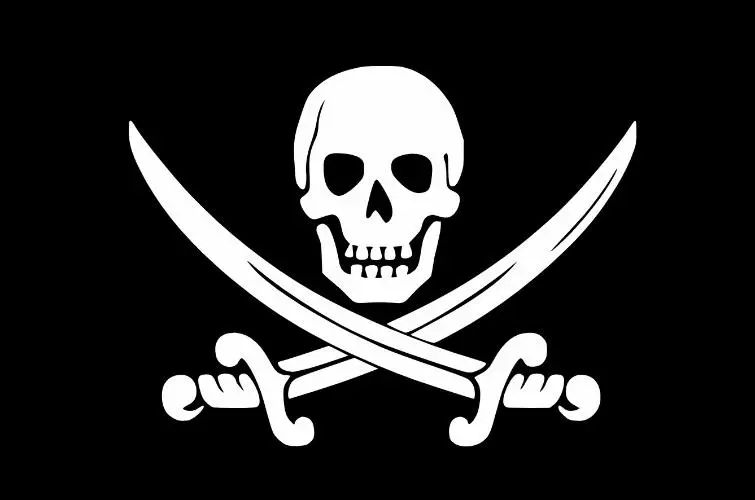
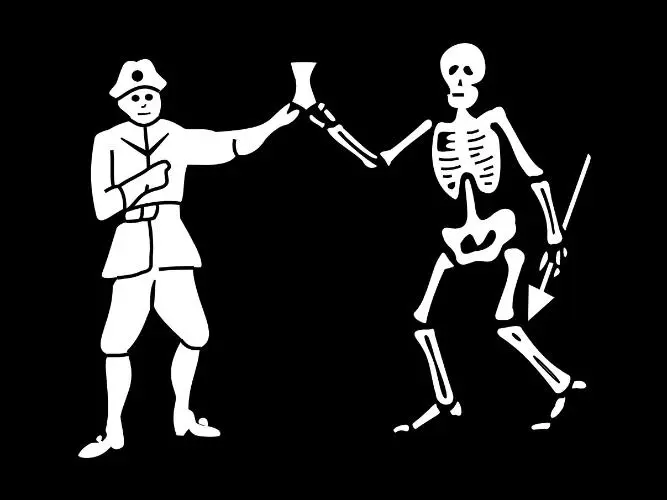
Sailors used skull-and-bones imagery to represent death long before piracy existed. It shows up in European heraldry and folklore for centuries. Pirates adopted and sharpened that existing symbolism for their own use. This was especially true between the 1710s and 1720s, when the flag most people now recognize as the “Jolly Roger” became common practice. Several captains flew it, including Samuel Bellamy, Edward England, and John Taylor.
Which Pirate Flags Are Real, and Which Are Legend?
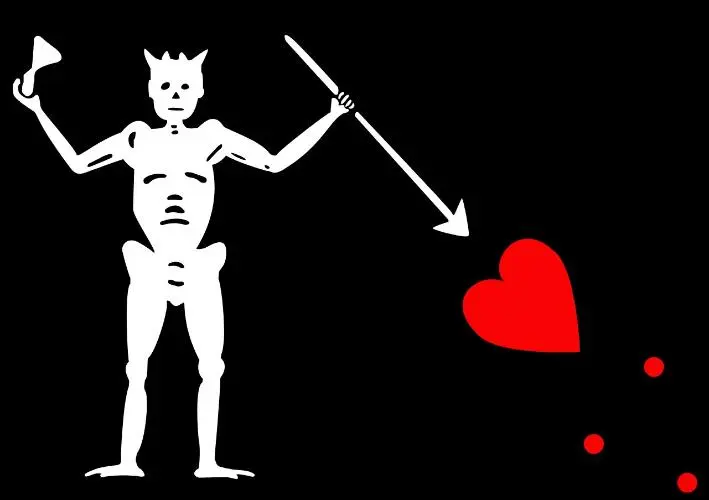
Here’s where the popular story gets complicated. According to Wikipedia’s account of the Jolly Roger’s history, most of the specific flag designs attributed to famous pirates today have no basis in any contemporary 18th-century source. That includes the elaborate horned skeleton linked to Blackbeard and the skull-and-crossed-swords linked to Calico Jack Rackham. Many of these designs trace back to a 1959 German book, Bordbuch des Satans by Hans Leip. That book appears to have invented several flags wholesale, including ones now widely, and incorrectly, attributed to Rackham and Stede Bonnet.
Bartholomew Roberts is the rare exception. His flags are among the very few with genuine period evidence behind them. One shows Roberts standing on two skulls labeled “ABH” and “AMH” (“A Barbadian’s Head” and “A Martiniquan’s Head”) — a direct message aimed at the colonial governors trying to hunt him down.
None of this makes the popular designs less iconic — they’ve become part of pirate lore regardless of their origin. But it’s worth knowing which flags are documented history and which are 20th-century invention before repeating the legend as fact.
Pirate Skulls in Popular Culture
The romanticized version of the pirate skull owes a lot to fiction, not history. Robert Louis Stevenson’s Treasure Island helped cement the skull-and-crossbones as shorthand for danger and adventure in the public imagination, long before film picked it up. Franchises like Pirates of the Caribbean pushed the image further into mainstream culture. Tattoo artists, fashion brands, and video games have kept it there ever since. The symbol now carries almost none of its original threat; it mostly signals rebellion, individuality, or a love of adventure. If you’re curious about the skull as a symbol more broadly, we cover more of that ground in our skull facts guide.
Enjoy separating myth from fact? Our skull information hub covers more debunked legends and real skull history.
Frequently Asked Questions
Both, depending on which version you mean. The general idea, a black flag with a skull and crossbones, was genuinely used by multiple pirate captains in the 1710s and 1720s. However, many of the specific designs attributed to individual pirates, like Blackbeard and Calico Jack, were invented decades later, in a 1959 German book. Those designs have no basis in period sources.
Bartholomew “Black Bart” Roberts is the clearest example of a pirate whose flags have genuine historical evidence behind them. Most other famous designs, including the ones linked to Blackbeard and Calico Jack Rackham, are modern reconstructions or inventions.
The Knights Templar used skull-and-crossbones imagery in some of their symbolism, centuries before the Golden Age of Piracy. Some writers have drawn a symbolic link between the two. There’s no documented historical connection showing pirates directly borrowed the symbol from the Templars, though the visual similarity has fueled plenty of speculation.
In practice, they’re often the same image. “Pirate skull” typically refers to the flag-style symbol, a skull above crossed bones. Other skull-and-crossbones uses, like hazard warning signs, share the same visual shorthand for danger without any pirate connection at all.